
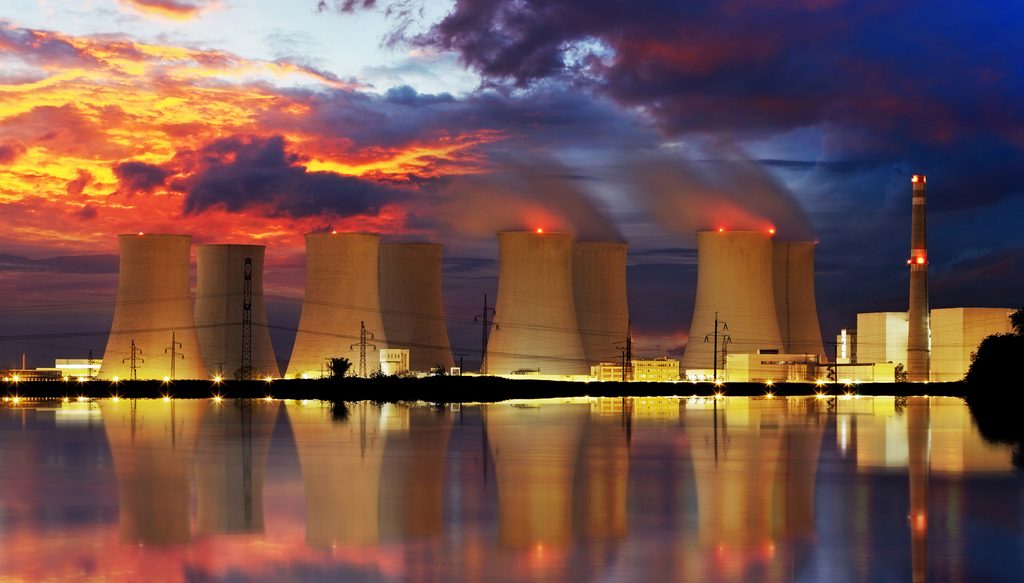
Nuclear energy is the energy from the nucleus of an atom. It is the energy that binds protons and neutrons together in the nucleus of the atom. In the human world of power plants, cities, submarines, etc, nuclear energy is the most powerful in the world. It is 1 million to 10 million times more powerful than energy from a typical chemical reaction.
The Models of the Atom
Different models of the atom have been put forward. The first model was the Sold Sphere Model by John Dalton in 1803. He viewed atom as a tiny, hard indivisible sphere.

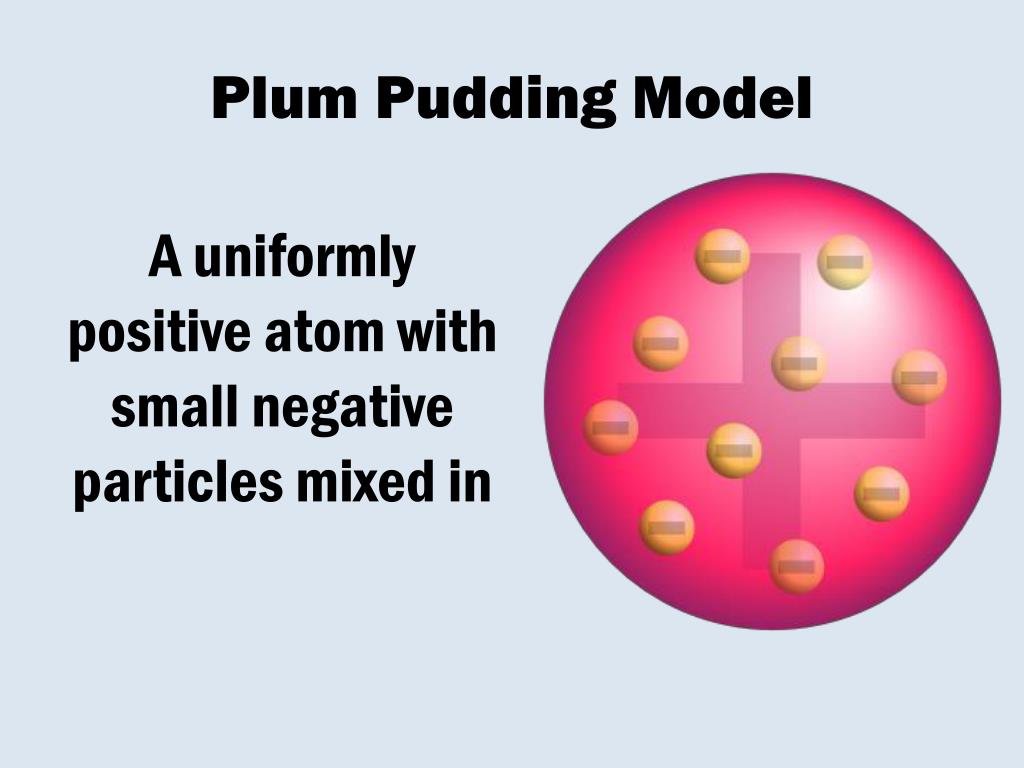
The next model was Plum Pudding Model by J.J. Thomson in 1904. He viewed the atom as a ball of positive charge with negative electrons stuck inside it like plums in a pudding, after his 1897 cathode ray tube experiment, where electron was discovered.
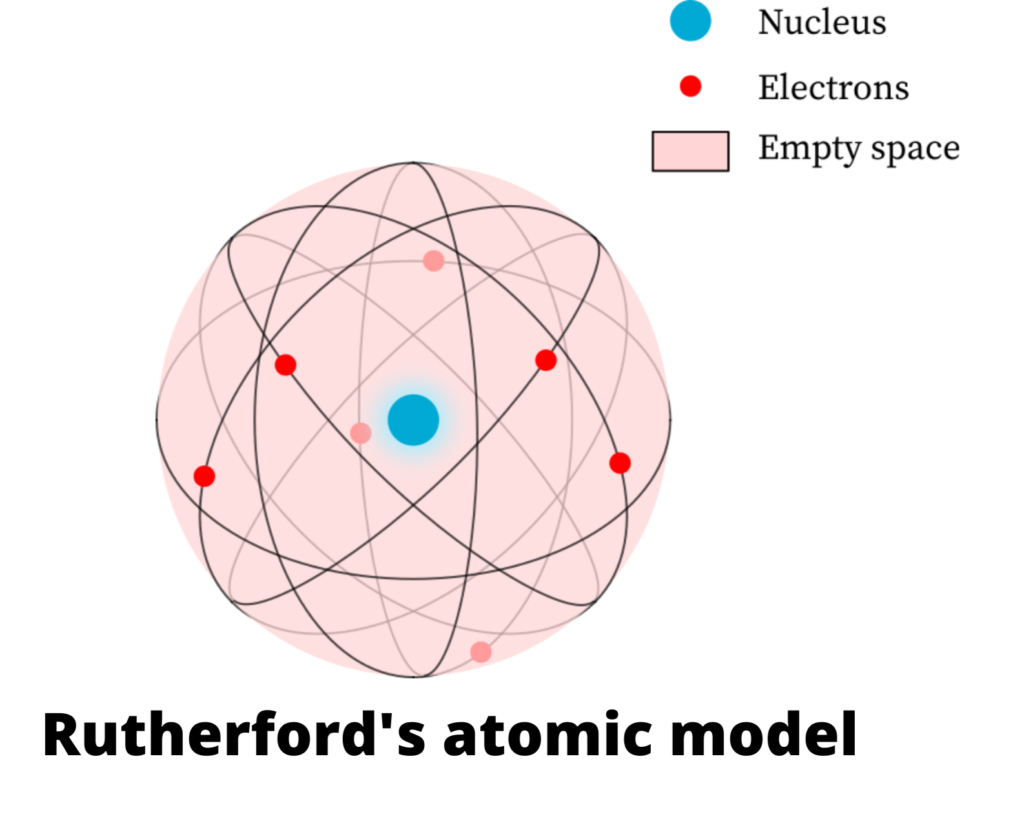
The next model was Nuclear Model by Ernest Rutherford in 1911. He proved the atom has a tiny, heavy, and positive centre called a nucleus, with empty space and electrons revolving around it, after his famous Alpha Scattering Experiment.
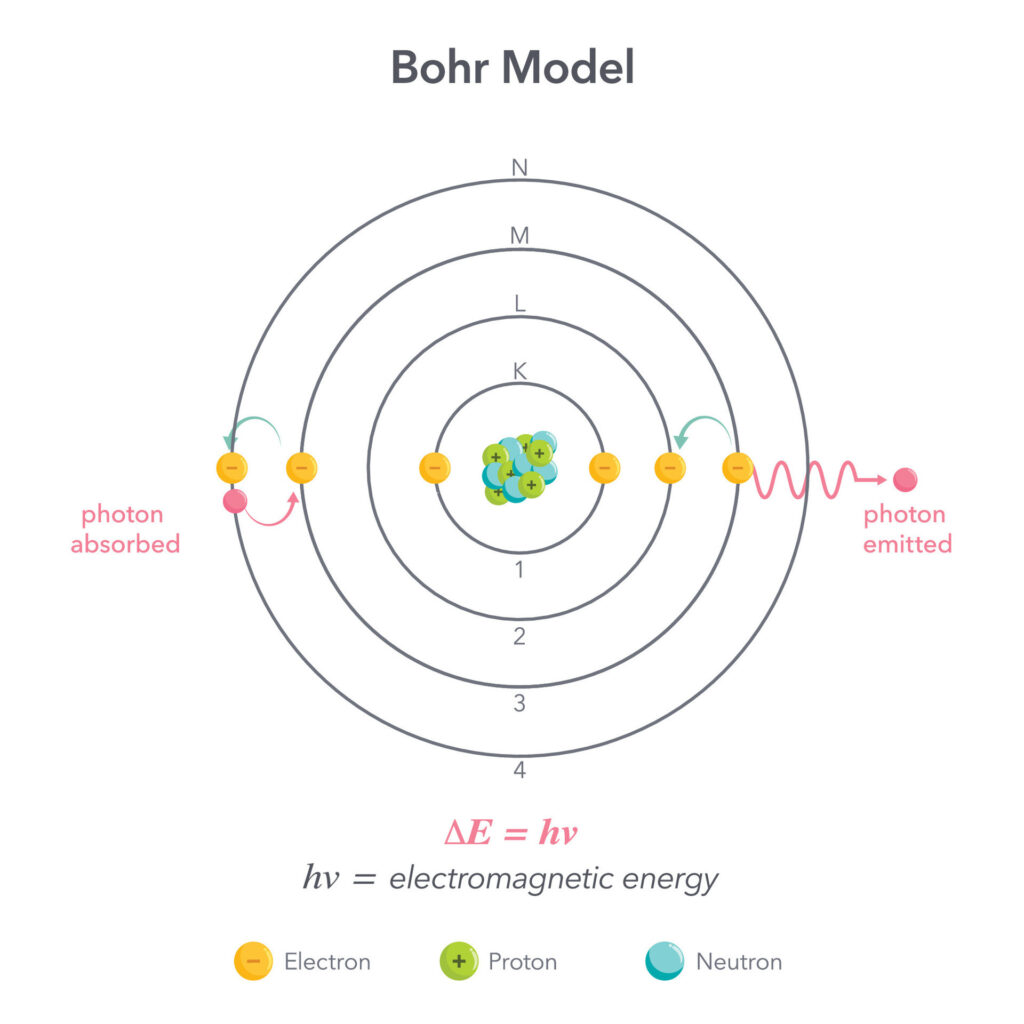
The next model was Planetary/Bohr Model by Niels Bohr in 1913. He propounded that electrons move around the nucleus in fixed rings or energy levels, much like planets orbit the sun, after he was able to give satisfactory explanation to electrons not crashing into the nucleus and atomic emission spectra.
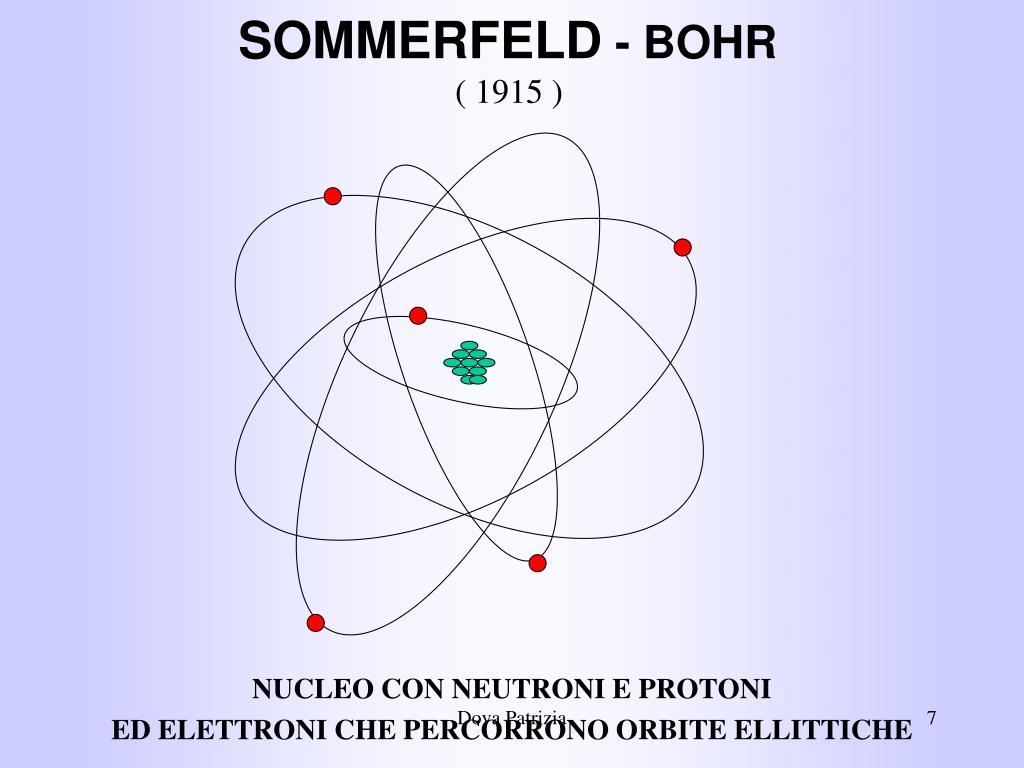
The next model was Elliptical Orbit Model by Arnold Sommerfeld in 1916. This model is an extension of Bohr’s model. Sommerfield propounded that electrons orbit the nucleus in elliptical paths as well as circular ones, and have sub-energy levels. He introduced the idea of subshells (s, p, d, f). He also introduced the quantum numbers for angular momentum and spin-orbit coupling. Sommerfield was nominated for the Nobel Prize a record 81 times. He never won it!
The next model was Electron Cloud Model by Erwin Schrödinger in 1926. He propounded that electrons do not have fixed orbits; instead, they exist in clouds (orbitals) where there is a high probability of finding them.
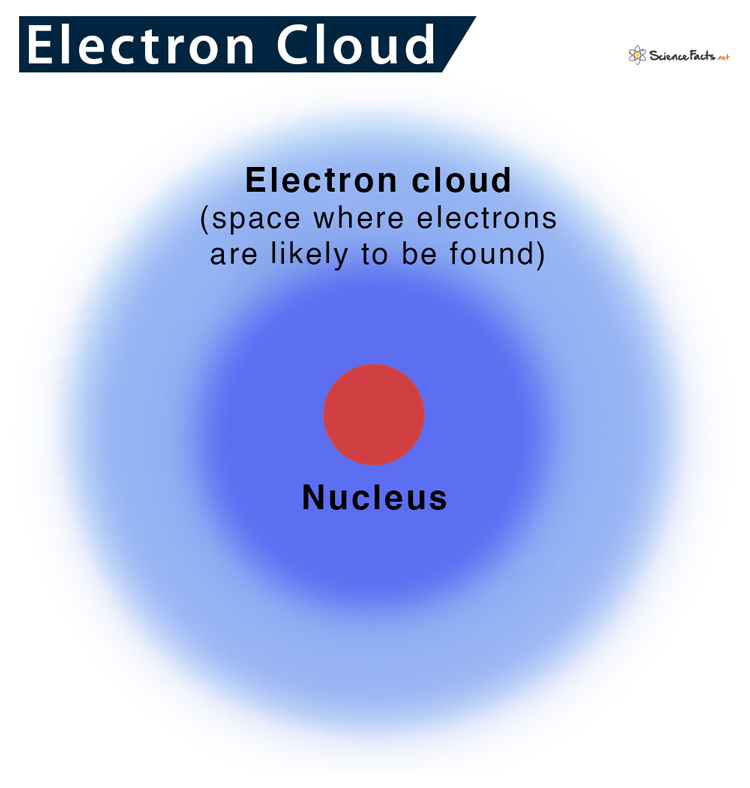
These are the models of the atoms. From these models, we know that an atom is made up of basically three sub-particles: protons, neutrons and electrons. The protons and nucleus are located in the nucleus of the atom while electrons are on the shells outside.
The Discovery of Electrons
Electron was discovered by the English physicist J. J. Thomson in 1897. He found these tiny, negative particles while testing cathode ray tubes. J.J. Thomson used a sealed glass tube with most of the air pumped out. He applied a high voltage across two metal plates inside the tube. This created a glowing stream of radiation, known as a cathode ray, which traveled from the negative plate (cathode) to the positive plate (anode).
To study the nature of this ray, he added two elements to the setup:
Electric Plates: He placed a positive plate above the ray and a negative plate below it. The glowing beam bent upward toward the positive plate.
Magnets: He added magnetic fields and observed a similar deflection.
Because the ray was attracted to positive charges and repelled by negative ones, Thomson concluded that the ray was not made of light wave energy. Instead, it consisted of streams of negatively charged particles.
The Discovery of the Neutron
The neutron was discovered in 1932 by the British physicist James Chadwick, who proved the existence of neutral subatomic particles with a mass similar to protons. He won the 1935 Nobel Prize in Physics for this work.
In 1920, Ernest Rutherford predicted the neutron because the math behind atomic weights simply did not add up. At the time, scientists knew about protons (positive charge) and electrons (negative charge), but the atomic models built from them were deeply flawed. There was mass discrepancy. Scientists could measure both the atomic number (the positive charge of an atom) and its atomic mass (how heavy it is). They noticed a massive contradiction:
A helium nucleus has a positive charge of +2 (meaning it has 2 protons). However, a helium nucleus has a mass equal to 4 protons. If the nucleus only contained protons, it should only weigh as much as 2 protons. Rutherford realised there must be something else inside the nucleus adding extra weight without adding extra positive charge.
To fix this mass problem, scientists in the 1920s proposed a messy theory (“Nuclear Electron” Theory). They suggested that a helium nucleus contained 4 protons and 2 electrons bound tightly together inside the core. The 4 protons gave it a mass of 4. The 2 inner electrons cancelled out two positive charges, leaving a net charge of +2.
Rutherford and other physicists strongly doubted this. Quantum mechanics showed that electrons are far too light and energetic to be trapped inside a tiny atomic nucleus. During his famous Bakerian Lecture to the Royal Society in 1920, Rutherford proposed a brand new idea. He suggested that an electron and a proton might bind together so tightly that they form a completely new, neutral atom or particle. He hypothesised a particle that would have:
Mass nearly identical to a proton. Zero net electrical charge. High penetrating power, making it nearly impossible to detect with standard electromagnetic equipment.
Rutherford even coined the term “neutron” around this time to describe this hypothetical particle. Because he was James Chadwick’s mentor at the Cavendish Laboratory, his 1920 prediction is precisely what inspired Chadwick to spend over a decade searching for the mysterious particle until he finally proved its existence in 1932.
The Discovery Experiment
James Chadwick discovered the neutron by tracking down an unknown form of radiation that scientists could not explain. He fired high-energy alpha particles (helium nuclei) from a radioactive polonium source at a thin sheet of beryllium. The beryllium emitted a highly penetrating, uncharged radiation. Earlier scientists mistakenly thought this radiation consisted of high-energy gamma rays. Chadwick directed this mysterious neutral radiation into a block of hydrogen-rich paraffin wax. The neutral radiation violently knocked protons (hydrogen nuclei) out of the wax.
By measuring the high velocity and energy of these ejected protons, Chadwick used the laws of conservation of momentum and energy to prove that gamma rays could not cause this effect. Instead, the radiation had to consist of uncharged particles with a mass roughly equal to a proton. He got it right. He won the 1935 Nobel Prize in Physics for this work.
Albert Einstein’s Famous “Nuclear Equation” E = mc2
Albert Einstein published his famous equation E = mc2 in 1905. It was a purely theoretical idea from his work on Special Relativity. The famous equation had nothing to do with Nuclear Physics as at that time. In fact, Nuclear Physics was not in existence during that period. In 1905, the structure of the atom was still a mystery. The nucleus itself was not discovered until 1911 (by Ernest Rutherford).
The equation did not arise from studying atoms or their nuclei. Einstein derived it from a simple “thought experiment” about an object emitting light. He concluded that if an object emits energy (light energy in this case), its mass must decrease by that exact amount. This led to the conclusion that mass and energy are one and the same physical entity. Einstein made mass-energy equivalence a new and universal law of physics.
Einstein proved that mass-energy equivalence is an absolute, universal law of nature—valid for all forms of energy and all forms of mass, without exceptions.
Before Einstein, a few scientists had proved mass-energy equivalence but not for all forms of energy. For instance, Henri Poincaré (1900), the famous mathematician suggested that electromagnetic energy behaves like a “fictitious fluid” with mass . However, he viewed it as a mathematical trick or a property of radiation only, not a universal law for all matter.
Also, Friedrich Hasenöhrl (1904), a German physicist came incredibly close. He calculated that a hollow cavity filled with radiation (light) would have extra mass because of the energy bouncing around inside it. He published a formula suggesting (off by a factor of 2.67). Just months before Einstein’s 1905 paper, he revised it closer to .
People call Einstein’s equation E = mc2 a nuclear equation because of its famous role in atomic bombs and nuclear power.
Radioactivity
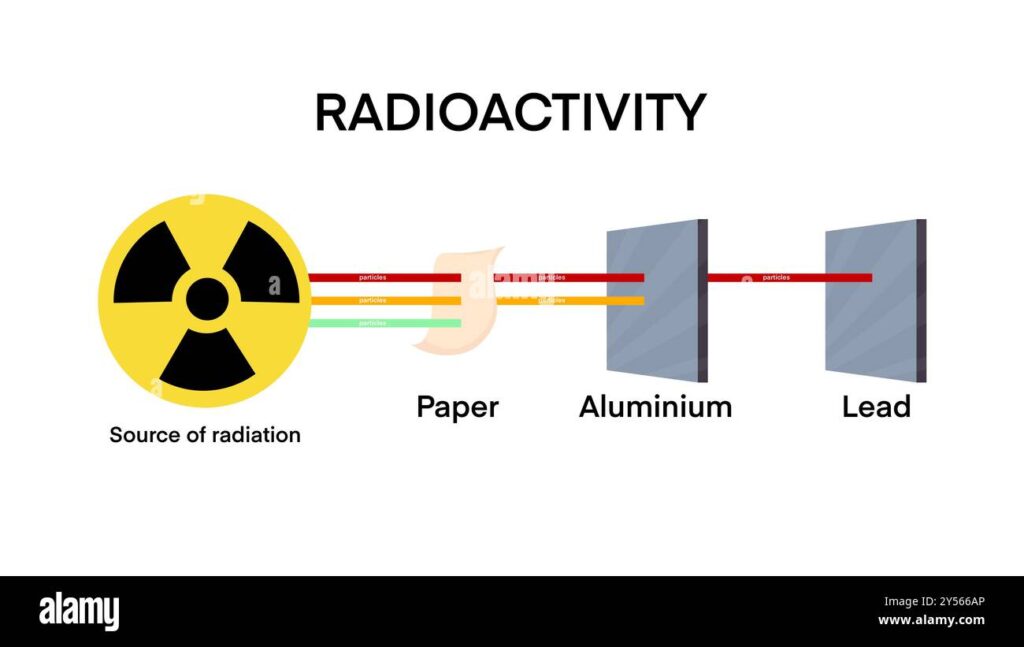
This is the spontaneous decay or disintegration of the nucleus of the atom of an element. Alpha particles, beta particles or gamma rays or a combination of the radiations are released. A new atom of different element or isotope of the original element is also produced. Energy is also released in form of heat. This is the nuclear energy, now in form of thermal energy, exploited either for peaceful purpose or destructive purpose.
An atom becomes unstable when there are too many neutrons or when there are too many protons or when the atomic size is large.
There are 118 known elements in the world. 38 of these elements are purely radioactive. This means the 38 elements have no stable isotopes. E.g. uranium, polonium, thorium, radium, etc.
Those three radiations released during radioactivity (alpha particles, beta particles and gamma rays) are dangerous. They are ionising. They are carcinogenic i.e. they cause cancer. Beta particles and gamma rays can penetrate human bodies. Alpha particles cannot penetrate human skin. They cannot destroy skin from outside except if the skin is already open e.g. wound. All the three radiations can cause mutations in human cells. This makes radioactive elements dangerous.
Uranium was discovered in 1789 by German chemist Martin Heinrich Klaproth in Berlin, Germany while he was analysing pitchblende mineral samples. He named it after the planet Uranus. He did not know that it is radioactive. Over a century after, in 1896, Henri Becquerel discovered uranium is radioactive by accident. He accidentally left uranium near photographic plates and realized it emitted an invisible energy. It fogged the photographic plates.
Between its discovery in 1789 and the discovery of its radioactivity in 1896, uranium was ignorantly used almost exclusively as a commercial colourant for glass and ceramics. Fortunately, uranium primarily emits alpha particles which cannot even penetrate the outer layer of dead human skin, and are completely blocked by the glass itself. So, people did not really get to know it is radioactive, unlike the case of Radium Girls in 1910s and 1920s, where radium was involved. Radium releases predominantly alpha radiation, but as it decays, it also produces beta and gamma radiation. Also, radium is around 2.7 million times more radioactive than natural uranium.
Scientists first reported radiation-induced skin damage and early ulcers as early as 1902, with leukemia cases in radiation workers noted by 1911. The undeniable link between radioactive materials and cancer became public and scientific consensus in the mid-1920s through the tragic cases of the Radium Girls and genetic proof in 1927.
The Radium Girls
Radium was discovered in 1898 by Marie and Pierre Currie and their assistant G. Bémont. It produces a continuous, bright green glow without sunlight as a result of its constant radioactive decay. By virtue of these fascinating luminous properties, people started using it in watches, compasses and consumer products.
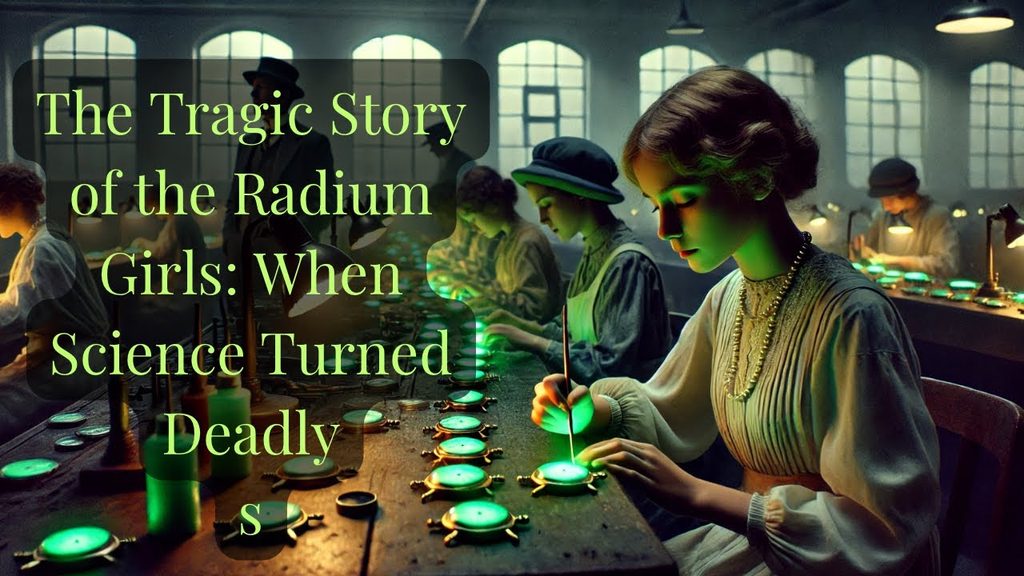
Military Need: Soldiers in WWI trenches needed to tell time in pitch-black darkness without using a flashlight (which would give away their position to snipers). Radium paint made wristwatches and compasses instantly readable. After the war, glowing radium watches became a fashionable, high-end luxury item for civilians, so demand skyrocketed.
United States Radium Corporation (USRC), Radium Dial Company, and a host of other companies, all in the United States, employed the girls. The girls were predominantly teenagers and young women in their teens and twenties. They were instructed to paint the luminous watch dials with radium-based paint.
They were instructed to use their mouths to sharpen their brushes so as to be able to paint the watches properly. In the process, they inadvertently ingested deadly amounts of radium. Over time, they suffered horrific bone decay, jaw necrosis, and fatal cancers. Radium is highly radioactive, unknown to the girls.
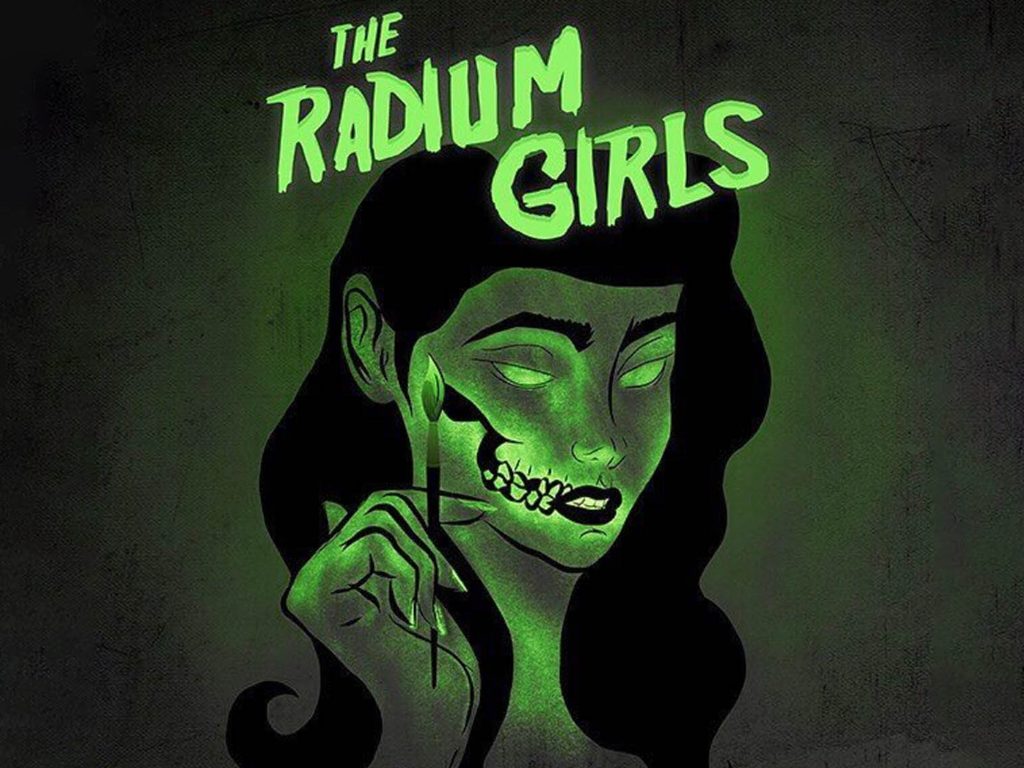
The management of the companies was aware of the dangerous nature of radium, but they deliberately concealed this information from the workers and continued unsafe practices to protect their profits. Men were given protection. While female dial painters were told to use their mouths to sharpen brushes, male employees in the same factories were provided with protective gear like lead aprons and tongs to handle radium, demonstrating the company’s knowledge that it was hazardous.
The management of the companies lied to the workers directly. As the women began to fall ill, management repeatedly assured them that the radium paint was completely safe, with company officials even lecturing workers and telling them the illnesses were from “viral infections”. Their own scientists suffered. In 1925, one of USRC’s senior chemists died of aplastic anemia, a clear sign of radiation poisoning. Yet, the company continued to deny any connection between their work and the sickness just to protect their business and profits.
Over time, it became evidently clear that radium was responsible for the sicknesses and cancers. Dozens of the girls died of exposure to the radiation. Although their employers denied responsibility, some of the women who were still alive fought back in court. Each received a settlement of $10,000 in cash and were granted a lifetime annual pension of $600 to help with living and medical expenses, and the company also agreed to cover their future medical costs.
The compensation was not a direct admission of fault by the company, and for many of the women, any amount of money could not reverse the severe, fatal health effects they were already suffering from. The tragic sacrifice of the girls ultimately led to stricter occupational health laws.
The Radium Girls tragedy was that nobody knew (or rather, companies ignored growing medical evidence) that radium is a calcium mimetic—meaning the girls’ bodies absorbed it straight into their bones, where it sat forever, destroying them from the inside out before they died. The most stable and common isotope of radium, radium-226, has a half-life of approximately 1,600 years. This means the remains of the girl are still radioactive today in their graves.
The First Nuclear Fission by Man in the World
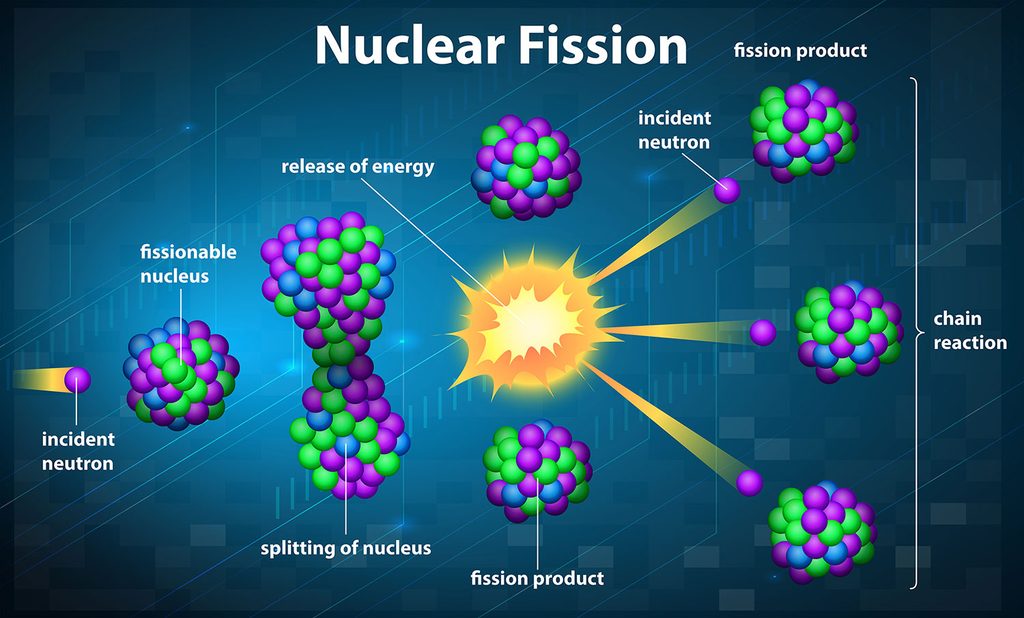
Nuclear fission is the process where a large atom splits into smaller parts. A huge amount of energy is released in the process. It happens when a heavy nucleus, like uranium, absorbs a neutron.
Before 1934, firing alpha particles at atoms was the primary method for probing the nucleus. Remember Ernest Rutherford (1911) in his famous Alpha Scattering experiment? He fired alpha particles at thin sheet of gold foil. Most alpha particles flew straight through (because atoms are mostly empty space). A few were slightly deflected sideways. A very tiny fraction—about 1 in 8,000—bounced straight back. This proved that the atom had a tiny, dense, positively charged centre: the nucleus.
Alpha particles are positively charged. The nucleus is also positively charged. As an alpha particle gets close, the electromagnetic repulsion becomes incredibly strong. So, alpha particles are always repelled as they get close to the nucleus.
Enrico Fermi’s Experiment 1934
Italian-American physicist, Enrico Fermi was probing the nucleus of the atom. He felt neutrons would be the right projectiles to probe the nucleus of the atom. Because neutrons have no charge, they would not be repelled by the nucleus. A neutron can move right into the nucleus of a heavy element like uranium with zero resistance. He was right.
So, in 1934, his team conducted the experiment in Rome in 1934. They systematically bombarded uranium atoms with neutrons and observed puzzling results. Fermi’s team was trying to create the first “transuranic” elements (elements heavier than uranium, with atomic number greater than 92) by bombarding a uranium target with neutrons. They observed new radioactive products and, based on their chemical behavior, concluded these must be new elements 93 and 94, which they nicknamed Ausonium and Hesperium. This was actually the first nuclear fission by man in the world. Unfortunately, Fermi and his team did not know it was a nuclear fission. They thought they had created the first “transuranic” elements (elements heavier than uranium, with atomic number greater than 92). They were wrong.
Although their data showed the creation of something new, they did not realise they had actually split the uranium atom into smaller pieces—the process now known as nuclear fission.
Another major side discovery during these experiments was that, the group also discovered that slowing down neutrons, by passing them through materials like paraffin or water before hitting the nucleus, made the neutrons much more effective at inducing nuclear reactions. This crucial finding was a significant contribution to nuclear physics.
Enrico Fermi won the 1938 Noble Prize in Physics for his work on neutron irradiation and slow neutrons.
Ida Noddack, a female German chemist, was the first person to propose the idea of nuclear fission—though her insight was famously ignored for years. When Enrico Fermi published his results claiming he had created elements heavier than uranium (“transuranic” elements) by bombarding uranium with neutron, Ida Noddack published a paper critiquing his work. In it, she suggested an alternative explanation: that the uranium nucleus might not just absorb the neutron, but could actually break apart into several large fragments that were isotopes of known, lighter elements. This was the first published proposal of what we now call nuclear fission.
Her idea was met with widespread dismissal, even ridicule. Leading scientists, including Otto Hahn, considered it “inadmissible” and “absurd”. Fermi himself read her paper but remained unconvinced. It took another four years for fission to be confirmed.
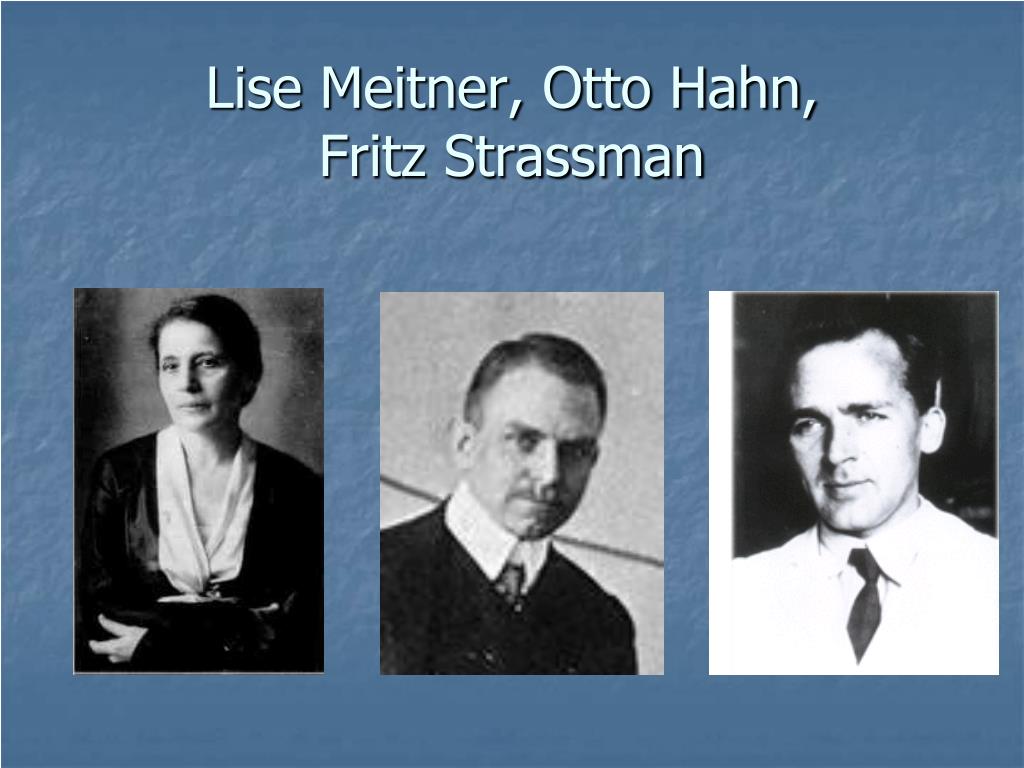
The Berlin Experiment: Otto Hahn and Fritz Strassmann (1938)
At the Kaiser Wilhelm Institute for Chemistry in Berlin, German chemists Otto Hahn and Fritz Strassmann were bombarding uranium atoms with neutrons . Their goal was to create “transuranic” elements—heavier than uranium—following up on the work of Enrico Fermi, and at the same time sort out the mess Fermi had left behind.
What was the mess? Many chemists were confused by Fermi’s 1934 results because the radioactive byproducts he found (what he named as Ausonium and Hesperium) did not behave chemically like elements 93 or 94. Hahn and Strassmann set out to purify and identify exactly what those mystery byproducts were.
However, their meticulous chemical analysis on December 17, 1938, revealed something entirely unexpected. They found that the reaction products were not heavy elements, but isotopes of barium, which is much lighter (atomic number 56 compared to uranium’s 92) . This was a revolutionary and confusing finding, as scientists believed a neutron could only chip small particles from a nucleus, not split it in two.
Otto Hahn had a close friend called Lise Meitner (a woman). They were close lifelong friends friends and scientific partners who collaborated for over 30 years. Lise Meitner was a theoretical physicist. In fact, she was one of the most brilliant nuclear physicists of her era.
Due to her Jewish heritage, Lise Meitner, Hahn’s long-time collaborator, had been forced to flee Germany earlier in 1938 . Despite this, Hahn wrote to her about the baffling results .
Over the Christmas holidays in Sweden, Meitner discussed the problem with her nephew, physicist Otto Robert Frisch . They realized Hahn and Strassmann could not be wrong. Remember Einstein’s equation ? Remember we said the equation had nothing to do with nuclear physics as at the time Einstein established the equation, because nuclear physics was not in existence then. Einstein made it categorically clear at that time that the equation is valid for all forms of energy and all forms of mass, without exceptions.
So, Meitner used the equation and calculated the energy released from the split was about 200 million electron volts (MeV), a massive amount for a single atom! She revealed to the world how insanely massive, energy from nuclear fission is. To put this into perspective that we would all understand well, the energy from 1 gram of Uranium-235 can power a single 100-watt light bulb continuously for about 24,000 hours — which is roughly 2.7 years. Read that again! I didn’t say 1 kg. I said 1 gram of Uranium-235. A pinch of salt is roughly 1 gram. That’s to let you know how powerful nuclear energy is.
Meitner’s nephew, Frisch, drawing an analogy to how living cells divide, named this new process “nuclear fission”.
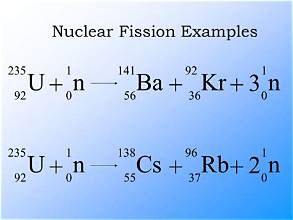
The findings were published in quick succession in early 1939: Hahn and Strassmann provided the chemical proof, while Meitner and Frisch delivered the physical explanation.
The discovery opened the door to understanding the immense power within the atom, ultimately leading to both nuclear power and the atomic bomb. While Otto Hahn alone received the 1944 Nobel Prize in Chemistry for the discovery, the crucial contributions of Lise Meitner, Fritz Strassmann, and Otto Frisch are now widely recognized as integral to this landmark achievement.
Transmutation
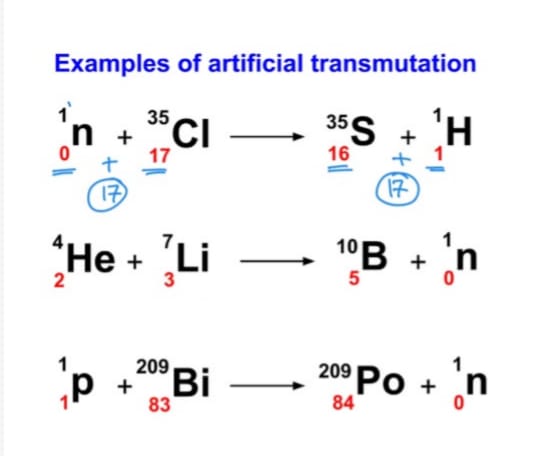
This is the conversion of one atom to another atom during nuclear reaction. Remember Dalton’s atomic theory? Part of the theory says atom can neither be created nor destroyed. Transmutation shows that this is not true. Natural transmutation was discovered by Ernest Rutherford and Frederick Soddy in 1901 and 1902. While studying radioactive thorium at McGill University, they realised that radioactive elements spontaneously decay and transform into different elements.
Later in 1919, Ernest Rutherford achieved the first artificial transmutation. Rutherford became the first person to artificially change one element into another by bombarding nitrogen nucleus with an alpha particle, turning it to an oxygen nucleus and releasing a proton. Although, he bombarded nitrogen nucleus with alpha an particle, this is not considered nuclear fission. Why? The nitrogen nucleus did not split. The nitrogen nucleus only temporarily absorbed the alpha particle, and eventually released a proton.
The First Man-Made Self-Sustaining Nuclear Chain Reaction
Remember in 1938, Otto Hahn with the contributions of Fritz Strassmann, Lise Meitner and Otto Frisch, successfully created and identified nuclear fission. Remember in nuclear fission, a large atom splits into smaller parts with the release of not only energy but also a few extra neutrons.
If a neutron hits a uranium atom, it splits it. This split releases more neutrons, which can then split other uranium atoms, releasing even more neutrons and setting off a self-sustaining reaction. This is a simple logic.
Following the announcement of nuclear fission by Otto Hahn and Fritz Strassmann, another scientist Joliot-Curie assembled a team in Paris with Hans Halban and Lew Kowarski to investigate the phenomenon. As a physicist, Joliot-Curie focused on proving the physical reality of fission (Hahn had provided chemical proof). He quickly devised elegant experiments to demonstrate that the uranium nucleus was indeed splitting.
The key question was whether this splitting process, fission, released additional neutrons. If it did, a self-sustaining chain reaction could theoretically be possible. Joliot-Curie’s team, like Enrico Fermi’s group at Columbia University in the U.S., raced to find the answer. By March 1939, they were the first to prove that the fission of uranium was accompanied by the emission of several neutrons. This was the critical experimental evidence that proved the concept of a nuclear chain reaction.
Joliot-Curie and his team quickly recognised the immense potential of this discovery. They began exploring practical methods to achieve a chain reaction and filed several patents on behalf of the French National Scientific Research Fund. However, their research was interrupted by the Nazi invasion of France in 1940.
This scientific pursuit of self-sustaining nuclear chain reaction was accelerated by a stark, real-world threat. In 1939, as World War II loomed, Fermi and other physicists were deeply concerned that Nazi Germany might develop an atomic bomb first. This fear galvanized them into action.
In July and August of 1939, Leo Szilard travelled to Einstein’s vacation home on Long Island, New York, to discuss the famous letter to President Franklin D. Roosevelt, warning of the potential for atomic weapons and urging U.S. government support. He was accompanied by fellow physicists Eugene Wigner and Edward Teller.
The letter, known as the Einstein-Szilárd letter, was written to warn President Franklin D. Roosevelt. Szilard was deeply concerned that Nazi Germany was also researching nuclear fission and might be the first to develop an atomic bomb. The letter informed the President that the latest nuclear research, including work by Fermi and Szilard themselves, made a nuclear chain reaction possible. It stressed that this could lead to the creation of “extremely powerful bombs” and urged the U.S. to take action and fund its own research.
Szilard sought out Einstein for several reasons. First, Einstein’s immense fame ensured the letter would get the President’s attention. Second, while Einstein’s own work wasn’t directly related to the bomb’s physics, his prestigious position made him a credible spokesperson. It was a collaboration: Szilard and his colleagues crafted the scientific content, and Einstein, after reviewing it, provided his signature to give the letter its necessary weight.
This led to the creation of the Manhattan Project, with Fermi’s work on the Chicago Pile-1 (CP-1) becoming a top-secret, top-priority project. The goal was to prove that a controlled chain reaction was achievable as a stepping stone to building an atomic weapon.
Eventually, the first man-made self-sustaining nuclear chain reaction was achieved on December 2, 1942, with an experimental reactor known as Chicago Pile-1 (CP-1). This event, led by Fermi, took place under the stands of the abandoned Stagg Field football stadium at the University of Chicago and was a crucial step in the Manhattan Project. The reactor was built by Fermi and a team of 43 scientists under the west viewing stands of the stadium.
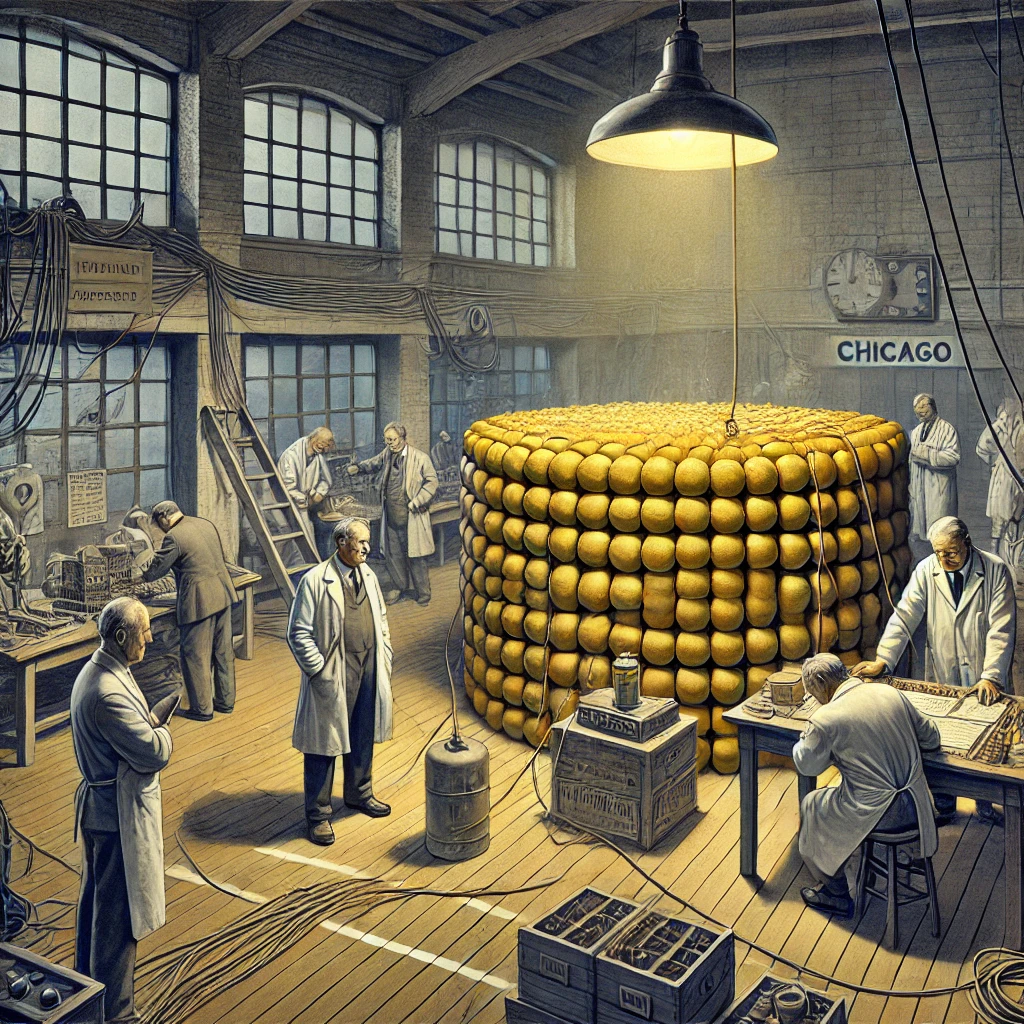
The structure was a large, 20-foot-tall pile of graphite bricks (which is how it got the name “pile”), built in 57 layers and weighing over 770,000 pounds. The design reflected a huge advance in nuclear physics; before this success, the project had faced setbacks, including challenges securing high-purity graphite and a sub-critical test assembly that failed to sustain a chain reaction.
The pile contained 385 tons of graphite, which acted as a neutron moderator to slow down neutrons, and 46 tons of uranium fuel in the form of uranium oxide and metal. The materials were worth about $1 million at the time (equivalent to roughly $16 million today). The US government funded the project.
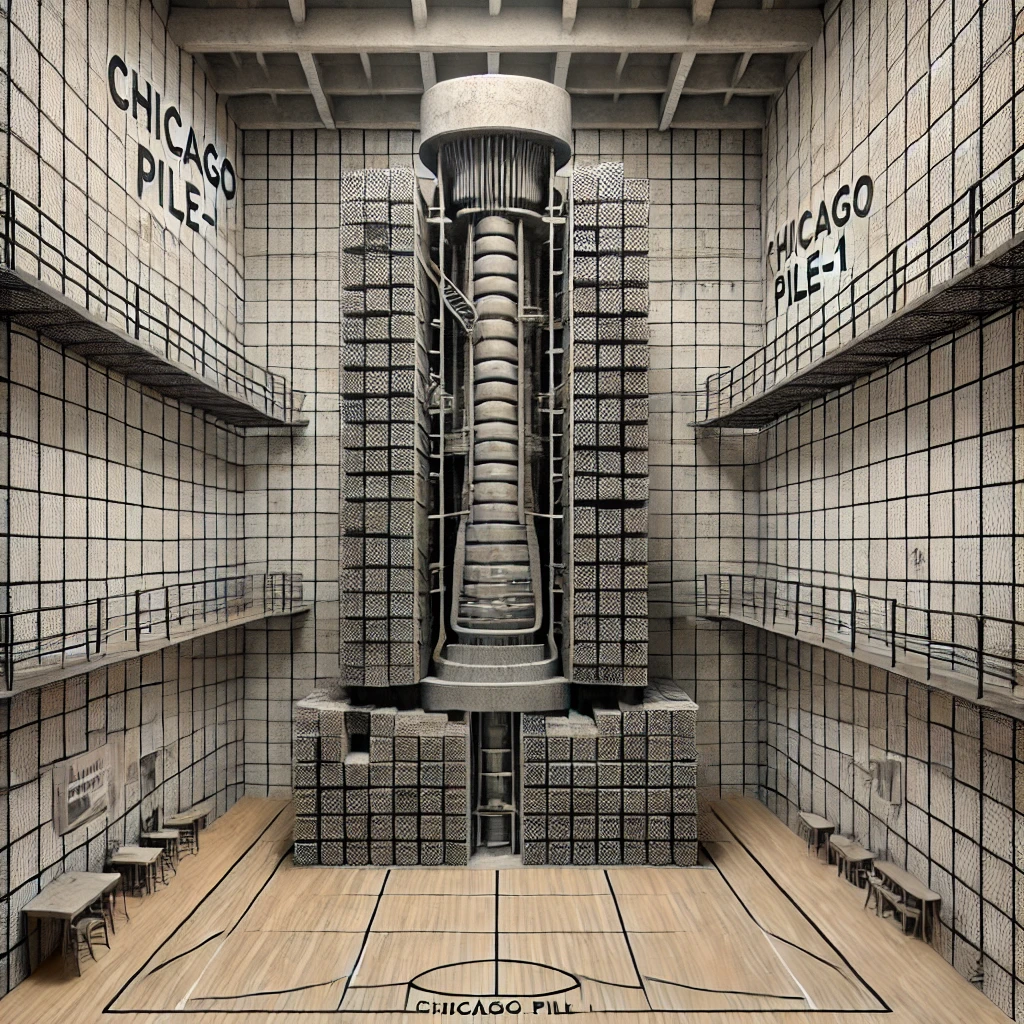
Control rods made of cadmium were inserted into the pile. Cadmium absorbs neutrons, so by carefully withdrawing these rods, Fermi and his team could control when the chain reaction would start and stop. The experiment was a tense and carefully controlled event.
As a safety measure, Fermi had three young graduate students, dubbed the “suicide squad,” standing by on top of the pile. Their job was to pour a cadmium solution over the reactor to stop the reaction if the control rods failed.
At around 3:25 pm, scientist George Weil withdrew the final control rod as Fermi directed. The neutron counters began to click rapidly, confirming the reactor had “gone critical” and achieved a self-sustaining chain reaction. Fermi reportedly remarked, “This is going to do it. Now it will become self-sustaining”.
The first controlled chain reaction produced a very small amount of power, less than enough to light a single lightbulb. The reaction was allowed to run for just 28 minutes before Fermi ordered the control rods reinserted to shut it down safely.
The success of CP-1 was the crucial proof that a nuclear chain reaction was possible, confirming the scientific basis for building an atomic bomb. The knowledge gained was used to develop the atomic bombs (The Manhattan Project) that would be used in the Trinity test and subsequently during World War II.
The reactor was disassembled in 1943 and moved to a more remote site, where it was rebuilt with radiation shielding and renamed Chicago Pile-2 (CP-2). This site eventually became the location of Argonne National Laboratory.
Nuclear Fusion
This is the process where two light atomic nuclei combine, or “fuse,” to form a single, heavier nucleus, releasing an enormous amount of energy in the process. This is the opposite of nuclear fission. Nuclear fusion is the process that powers stars like our Sun.
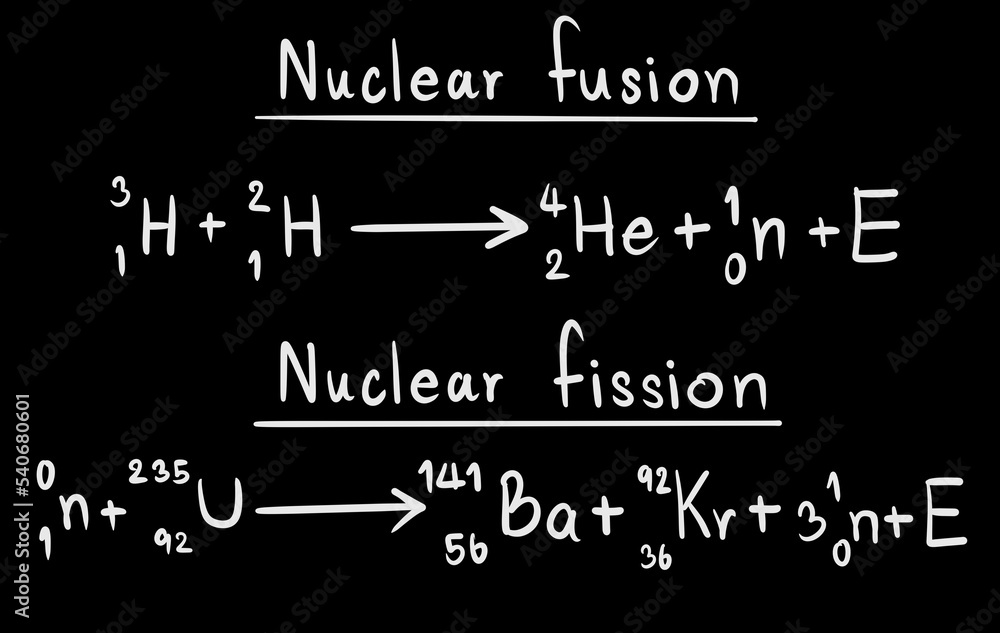
Nuclear fusion has many advantages over nuclear fission. (1) Nuclear fusion releases 3 to 4 times more energy per kilogram of fuel than nuclear fission. (2) Nuclear fusion fuel is nearly limitless – Fusion uses hydrogen isotopes from seawater and lithium, while fission relies on scarce, finite uranium. (3) Cleaner operation – Fusion produces no greenhouse gases and its only direct byproduct is harmless helium, with no volatile radioactive atmospheric releases. (4) No meltdown risk – Fusion is inherently safe; the reaction stops instantly if the system fails, with no chain reaction or runaway overheating, unlike fission. (5) Waste is short-lived – Fusion waste is safe within ~100 years, unlike fission waste which remains toxic for hundreds of thousands of years. And many more…
Despite all these advantages of fusion over fission, we still cannot and we may never be able to achieve nuclear fusion. Why? For fusion to occur, the nuclei must collide with enough force to overcome their natural electrical repulsion. This requires incredibly high temperatures and pressures. For us to achieve nuclear fusion on the surface of the Earth (considering the value of our atmospheric pressure), scientists have estimated that the process requires a minimum temperature of 100 million oC! This is practically impossible.
In 1920s, British astrophysicist Arthur Eddington was the first to propose that stars like our Sun are powered by the fusion of hydrogen into helium, beginning the theoretical understanding of the process.
The First Laboratory Observation: The first observation of a fusion reaction in a laboratory was made by Mark Oliphant and his colleagues in 1932. Early foundational work was also done by Ernest Rutherford, who had observed a related nuclear reaction in 1917. The team used a particle accelerator they had built to bombard a target made of deuterium (an isotope of hydrogen, also known as “heavy hydrogen”) with high-energy deuterons (the nuclei of deuterium atoms). When these deuterons struck the deuterium target, the nuclei fused. This reaction produced previously unknown isotopes, specifically tritium (a heavier form of hydrogen) and helium-3 (a lighter form of helium).
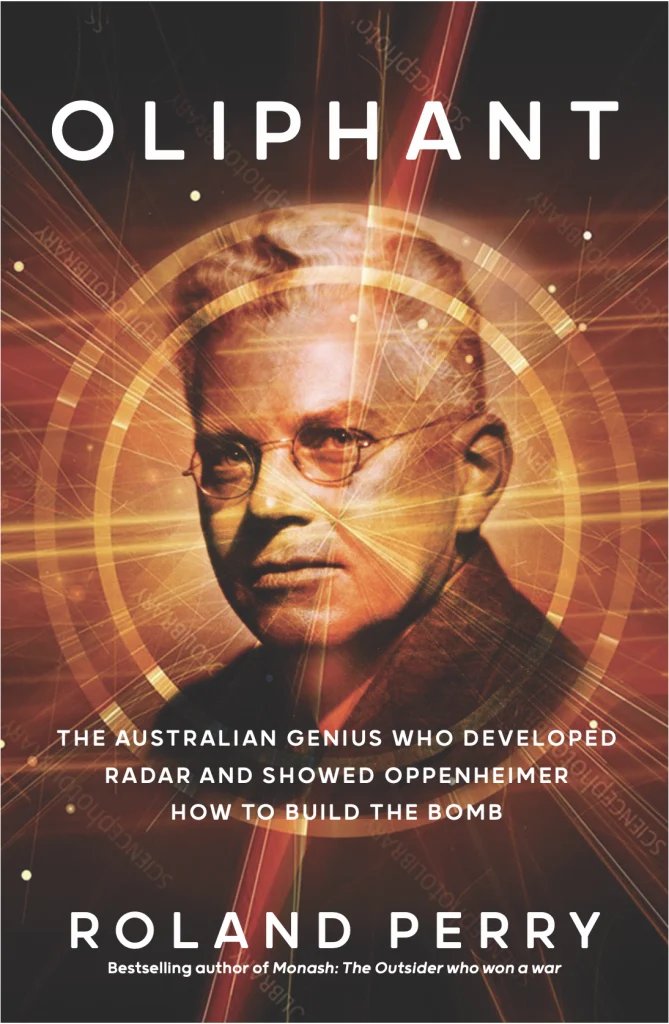
For Oliphant and his team, this was pure scientific curiosity. They were driven by a desire to understand the structure of the atomic nucleus, and they did not foresee its enormous practical applications . As Oliphant later reflected, “we had no idea whatever that this would one day be applied to make hydrogen bombs. Our curiosity was just curiosity about the structure of the nucleus of the atom”.
We said earlier that scientists had estimated that nuclear fusion requires a minimum temperature of 100 million oC to happen. How come Oliphant and his team were able to achieve the nuclear fusion in the laboratory without such huge temperature?
Oliphant didn’t use heat. Instead, he used a particle accelerator that acted like a microscopic submachine gun. He took a single deuteron (a hydrogen nucleus) and used incredibly strong electric fields to accelerate it to a massive speed. By the time it hit the target, that single particle was moving so fast that it had exactly the same kinetic energy as a particle inside a star that is tens of millions of degrees hot..
Even with his accelerator, Oliphant faced a massive problem. The nuclei he was shooting were positively charged, and they repel each other fiercely (this is called the Coulomb barrier). To overcome this repulsion, he needed his projectile to hit a target nucleus dead center.
This is why the reaction was so rare. For every million deuterons he shot at the target, only a tiny fraction actually fused; the rest just bounced off. In a star, you don’t need precise aim—you just rely on mind-boggling pressure and heat to force billions of collisions to happen at once. In Oliphant’s lab, he could only achieve a few successful fusions per second. Using heat to achieve nuclear fusion (as in the stars) is called thermonuclear fusion. The nuclear fusion Oliphant achieved is acccelerator-based fusion (using sheer speed).
Oliphant, working as a student of Rutherford, conducted the first systematic experiments on fusing hydrogen isotopes (like deuterium) in 1934, paving the way for practical research. Also IN 1939, Physicist Hans Bethe described the specific “proton-proton chain” reaction that powers the stars, the work for which he later won a Nobel Prize.
While these discoveries laid the scientific foundation, turning nuclear fusion into a practical energy source is a challenge that continues to this day with projects like ITER (International Thermonuclear Experimental Reactor).
Uranium Enrichment for Nuclear Energy
Nuclear energy is the energy from the nucleus of an atom. It is insanely powerful. It is 1 million to 10 million times more powerful than energy from a typical chemical reaction. During nuclear fission, a parent atom typically splits into two smaller daughter atoms, though occasionally it can split into three (ternary fission). It also releases neutrons and a large amount of energy.
The sum of the masses of the smaller daughter atoms is always less than the mass of the parent atom. The difference between the mass of the parent atom and the sum of the masses of the smaller daughter atoms is called mass defect. The mass defect appears lost. It is not lost. Rather, it is converted to the large amount of energy released in form of heat.
According to Einstein’s famous equation E = mc2, E is the nuclear energy released in the fission. It is the energy equivalent of the mass defect. m is the mass defect. Lise Meitner revealed to the world how insanely massive, energy from nuclear fission is, when she calculated the energy released from the split of uranium atom in Enrico Fermi’s 1934 Experiment.
To put this into perspective that we would all understand well, the energy from 1 gram of Uranium-235 can power a single 100-watt light bulb continuously for about 24,000 hours — which is roughly 2.7 years. A pinch of salt is roughly 1 gram. That’s to let you know how powerful nuclear energy is. Assume you use nuclear fuel in your car. If you fuel you car, full tank today, it might take the next 50 years before you refuel the car! That is how powerful nuclear energy is.
Uranium Enrichment
Uranium is mainly used for generation of nuclear energy. Why? This is because it is fissile (splits easily), abundant enough, energy-dense, and capable of sustaining a controlled chain reaction — making it the most practical fuel for nuclear power. 1 kg of uranium can release roughly as much energy as burning thousands of tonnes of coal.
Uranium enrichment is the process of increasing the concentration of the fissile isotope Uranium-235 (U-235) in natural uranium. Natural uranium contains about 99.3% U-238 and only 0.7% U-235. U-235 is easily fissionable while U-238 is not. Enrichment is necessary because most reactors can’t run on natural uranium. The level of enrichment determines the use. Low-enriched uranium (LEU), 3–5% is used for power reactors, High-enriched uranium (HEU), 20%+ is used for research reactors and naval propulsion, and Weapons-grade, ~90% is used for nuclear weapons.
How the enrichment is done:
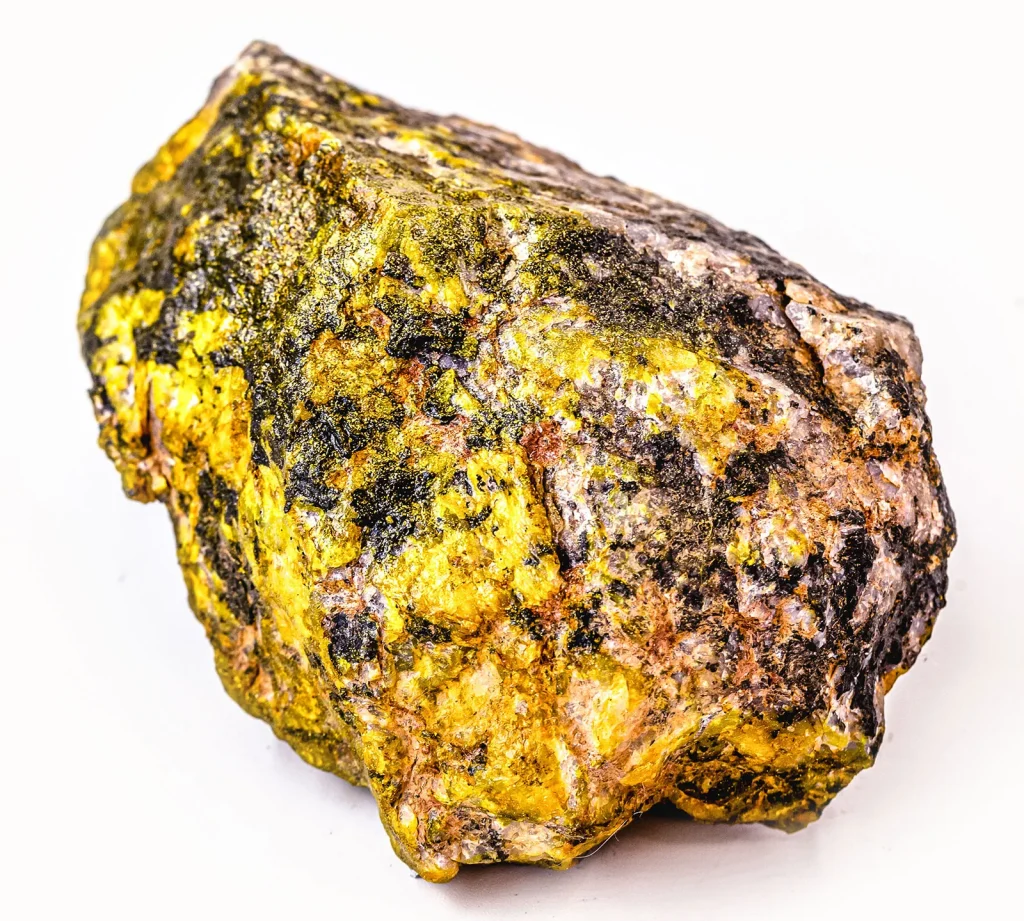
Uranium ore is first crushed and ground into powder, then chemically processed (leached and precipitated) to produce a concentrated powder called yellowcake (U₃O₈). Yellowcake is then converted to a gas UF₆ for enrichment. Because U-235 and U-238 have slightly different masses, they can be separated. The common separation techniques are:
Gas centrifuge – spins UF₆ gas at high speed; heavier U-238 moves outward, lighter U-235 concentrates near the center. This is the most common modern method.
Gaseous diffusion – forces UF₆ through porous barriers; lighter U-235 passes slightly faster. Older, energy-intensive.
Laser enrichment – uses lasers to ionise U-235 selectively. Advanced but less widespread.
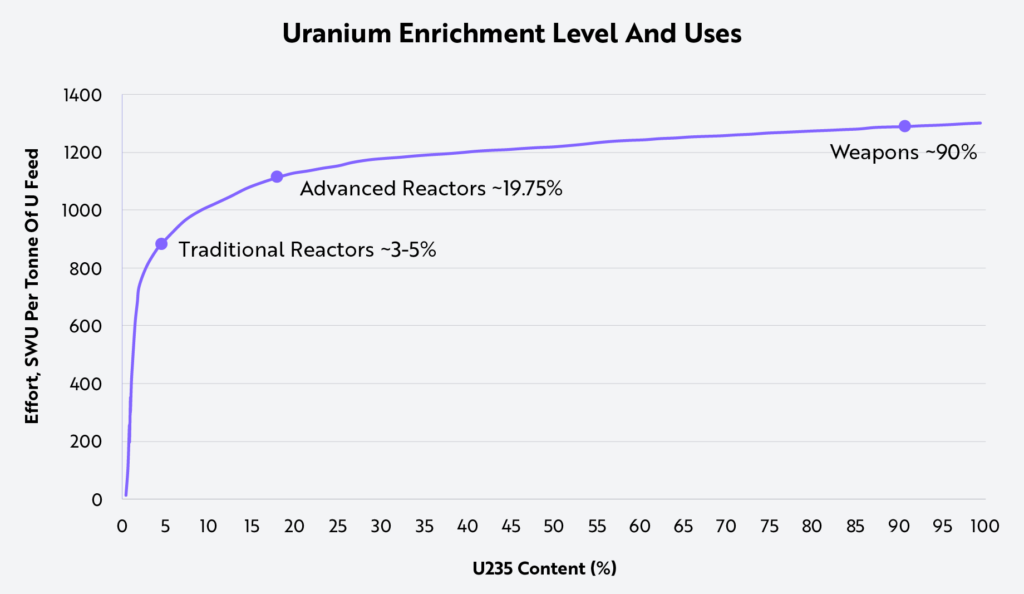
Fissionable U-235 is separated from heavier U-238. The separation is not 100% efficient. The separated U-235 is still a mixture of U-235 and U-238, only that the percentage of U-235 present has increased i.e. the mixture is now enriched with U-235. This enriched uranium is the one used in nuclear reactor.
Uranium enrichment process is not linear. Moving from 0.7% all the way to 60% is the hard part. It can take years and thousands of centrifuge hours. However, going from 60% to 90%, the last part, can take only weeks.
For the U-238 removed (usually >99.7%), it still contains U-235, only that the percentage of U-235 present has decreased i.e. the mixture now has depleted U-235. This second part is called Depleted uranium — lower U-235 (leftover, mostly U-238).
The Working Principle of Nuclear Power Station
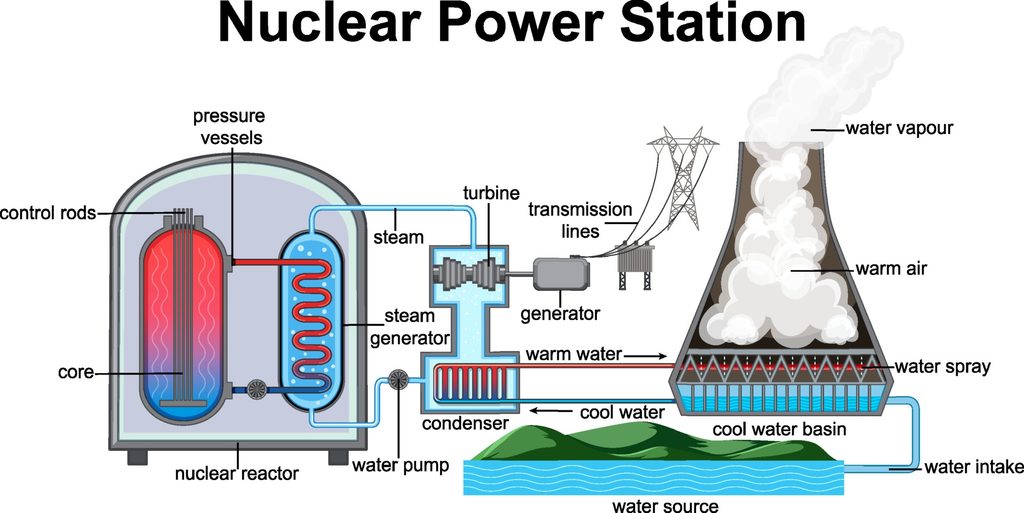
A nuclear power station works on the same basic principle as a coal or gas power station — it just replaces the heat source. Instead of burning fuel, it uses nuclear fission to generate heat.
Uranium-235 atoms in the reactor core are split by neutrons, releasing a large amount of heat and more neutrons, which sustain a chain reaction. A coolant (usually water) flows through the core, absorbs the heat, and carries it away. The hot coolant boils water in a secondary loop, producing high-pressure steam. The steam then spins a turbine. The turbine drives a generator, converting mechanical energy into electrical energy. The steam is cooled back into water and returned to the steam generator, and the cycle repeats.
Key controls:
Control rods absorb neutrons to slow or stop the chain reaction. If the control rods are dipped further into the core, they absorb more neutrons thereby slowing down the reaction rate. However, if the control rods are lifted, less neutrons are absorbed and the reaction proceeds at a faster rate.
Moderator (mostly water) slows neutrons so they can efficiently split more uranium atoms.
Shielding (concrete and lead) contains radiation.
In summary: Nuclear fission → heat → steam → turbine → electricity.
The Manhattan Project
World War II officially began on September 1, 1939, when Nazi Germany invaded Poland. Fermi’s work was done in Rome, Italy. But by 1938, the Italian dictator, Benito Mussolini’s fascist regime had passed anti-Jewish laws, and Fermi’s wife Laura was Jewish. When Fermi travelled to Stockholm to accept his Nobel Prize in late 1938, he and his family fled directly to the United States rather than returning to Italy.
Similarly, Lise Meitner (who explained fission) had to flee Nazi Germany in 1938. Albert Einstein, Szilard, Teller, and many others were also refugees from fascism. So the war and fascism scattered Europe’s best physicists, many of whom ended up in the U.S. or Britain — exactly where the Manhattan Project would later need them.
After Hahn and Strassmann discovered fission in 1938 (building on Fermi’s work), physicists realised a chain reaction — and thus a bomb — might be possible. The immediate fear was that Hitler’s Germany would build one first. Germany had Hahn, Strassmann, and Heisenberg still working there. This fear is what drove Einstein’s 1939 letter to Roosevelt (drafted with Szilard’s help), which warned of the danger and effectively launched the U.S. bomb effort.
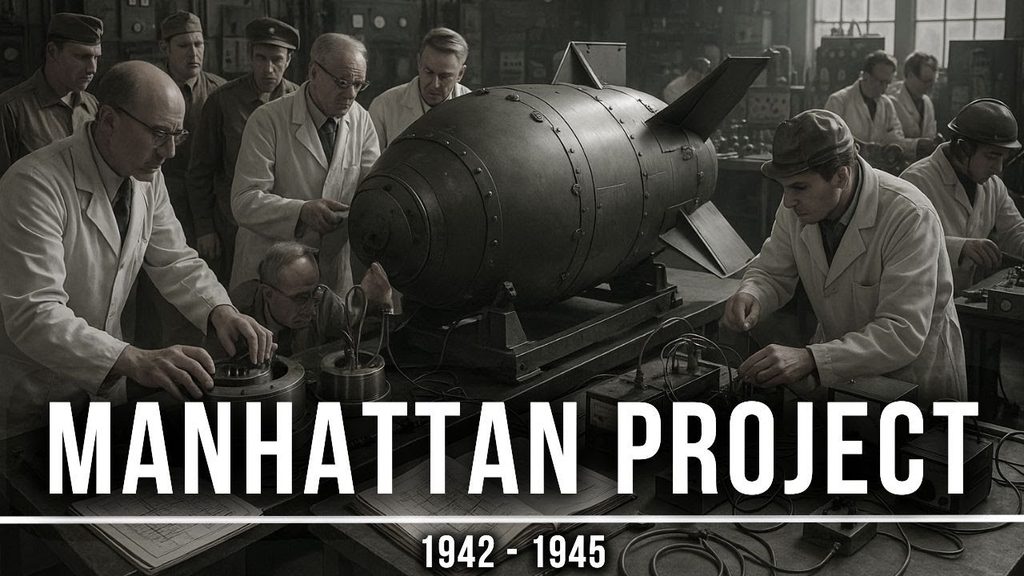
The Manhattan Project (1942) was created because of WWII. Without the war, the bomb research might have proceeded far more slowly, or not at all. The Manhattan Project was the top-secret American-led research and development program during World War II that produced the first nuclear weapons.
It was formally launched in 1942 under the U.S. Army Corps of Engineers, led by Brigadier General Leslie Groves. The scientists involved in the project were Robert Oppenheimer – scientific director at Los Alamos, Enrico Fermi – achieved the first controlled nuclear chain reaction (1942, Chicago), Richard Feynman, Niels Bohr, Edward Teller, Mark Oliphant, Ernest Lawrence, James Conant and many other leading physicists.
Albert Einstein was not part of the Manhattan Project, despite his famous letter to Roosevelt that helped spark it. The U.S. Army, which ran the project, refused to grant Einstein a security clearance because of the following: his pacifist and socialist views and his associations with left-wing and civil rights groups. J. Edgar Hoover’s FBI had a large file on Einstein and viewed him as a security risk. Army intelligence reportedly said he “would not be entrusted with any secret information.”
Einstein later said: “Had I known that the Germans would not succeed in producing an atomic bomb, I would have done nothing for the bomb.” He regretted his action. He became a leading voice for nuclear disarmament and world government, and he regretted signing the letter that eventually led to the bombing of Hiroshima and Nagasaki.
The major sites of the project are Los Alamos, New Mexico – bomb design and assembly, Oak Ridge, Tennessee – uranium enrichment and Hanford, Washington – plutonium production.
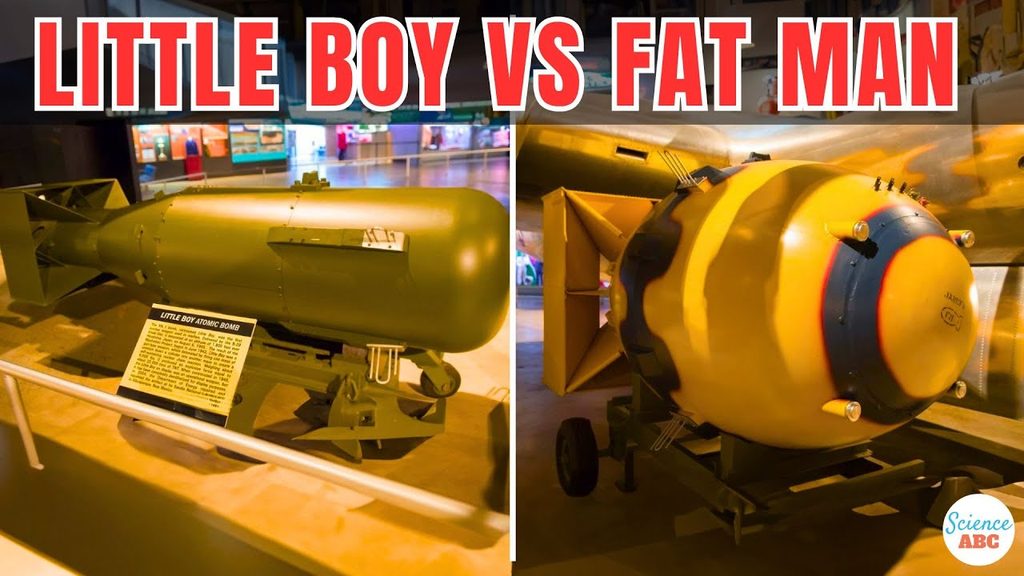
There were two bomb designs: a uranium gun-type weapon (“Little Boy”) and a plutonium implosion weapon (“Fat Man”). The Trinity test in New Mexico (July 16, 1945) was the first detonation of a nuclear weapon. The “Little Boy” was dropped in Hiroshima on Aug 6, 1945 while the “Fat Man” was dropped in Nagasaki on Aug 9, 1945). Japan surrendered on August 15, 1945, ending WWII. Japan had earlier attacked the U.S. Pacific Fleet at Pearl Harbor in Hawaii on the morning of December 7, 1941.
It is important to note that doctors were already using radiation (radiation therapy) to treat patients long before the first nuclear weapon was built. Radiation therapy predates nuclear weapons by ~50 years. After this, nuclear weapon use came in 1945, then electricity generation from nuclear energy (1951) and civilian power from nuclear energy (1954–57).
Other things that can be found in the atom include: quarks and gluons (inside nucleons), virtual pions, rhos, omegas (nuclear force exchange), delta baryons and nucleon resonances (excited states), hyperons (in hypernuclei), neutrinos and antineutrinos (produced in beta decay, or passing through/interacting), virtual quark–antiquark pairs (sea quarks), and other mesons (kaons, etc.) in high-energy reactions.
Photo Credits: alamy, animalia.life.club, fity.club, tools.wbez.org, narodnatribuna.info, accessdl.state.al.us, slideserve.com, tessshebaylo.com, dayinhist.com, ar.inspiredpencil.com, rolandperry.com.au, starchicago.org, youtube.com, ark-invest.com, circuitdiagram.co
Video Credit: Al Jazeera
PDF copy of the book is available. Interested? Reach out to: +234(08033487161), +234(08177093682) or osospecial2015@yahoo.com